Water Heater Service for Homeowners

Heating-element or thermostat problems can leave a tank water heater short on hot water or cause temperatures to fluctuate. Effective AO Smith water heater service starts by identifying whether the cause is a faulty component, sediment buildup, or another system issue, so the repair addresses the problem rather than just its symptom.
A cold shower or hot water that runs out too soon is frustrating. Regular maintenance can help identify wear before it disrupts your routine. Checking the anode rod, flushing sediment from the tank, and watching for leaks are practical ways to care for a water heater.
This guide covers common water heater problems, anode rod inspections, routine maintenance, and when to call a repair professional. It also explains what to consider when choosing help. For seasonal maintenance, see our webpage for pre-season specials.
Table of Contents
Sacrificial anode rod inspection and replacement
A sacrificial anode rod helps protect a tank water heater from corrosion. It gradually wears as it attracts corrosive elements that might otherwise damage the tank lining. Wear is expected, but a depleted rod offers less protection. If you notice rusty-looking hot water or recurring tank concerns, ask to have the rod inspected.
Rod location and removal depend on the water heater model. Find the rating plate and note the model and serial numbers, then use them to locate the correct manual and the rod’s access point. A technician can inspect the rod and explain whether it remains serviceable or needs replacement. Don’t force a stuck rod or guess at the correct fit, since the wrong part may not suit the tank.
An inspection can be useful even when the heater still produces hot water. A rod may deteriorate without changing the water temperature, so symptoms alone won’t reveal its condition. During service, ask what the inspection found, whether the rod is intact, and what replacement would involve. Those details help you decide whether to repair or monitor the unit.
Repair versus replacement depends on age, condition, and the type of fault. Traditional tank water heaters typically last 8-12 years. For a unit less than 8 years old, repairs are usually worthwhile when the repair cost is under half the price of a new unit. A minor repair on a unit less than 10 years old may also make sense. When a heater is over 10 years old, replacement may be the more practical financial choice, especially if problems keep returning.
Consider the rod’s condition alongside the overall state of the heater. A sound tank with one worn, replaceable part calls for a different decision than a tank with recurring leaks or repeated failures. Ask the technician to distinguish rod wear from other concerns, such as tank corrosion or persistent performance problems. That can help prevent replacing a functioning heater solely because a maintenance part needs attention.
For replacement parts, contact A. O. Smith through its customer support or parts channel. Have the model and serial numbers ready, and describe the rod’s location and heater type. These details help match the part to the unit. Don’t rely on appearance alone: rods can vary by model, and a similar-looking part may not fit.
Tax credits are separate from anode rod maintenance. A. O. Smith's federal tax credit program for heat pump and gas tankless water heaters ended on December 31, 2025. That date concerns the program, not a rule for inspecting or replacing a tank’s anode rod.
Water heater preventative maintenance
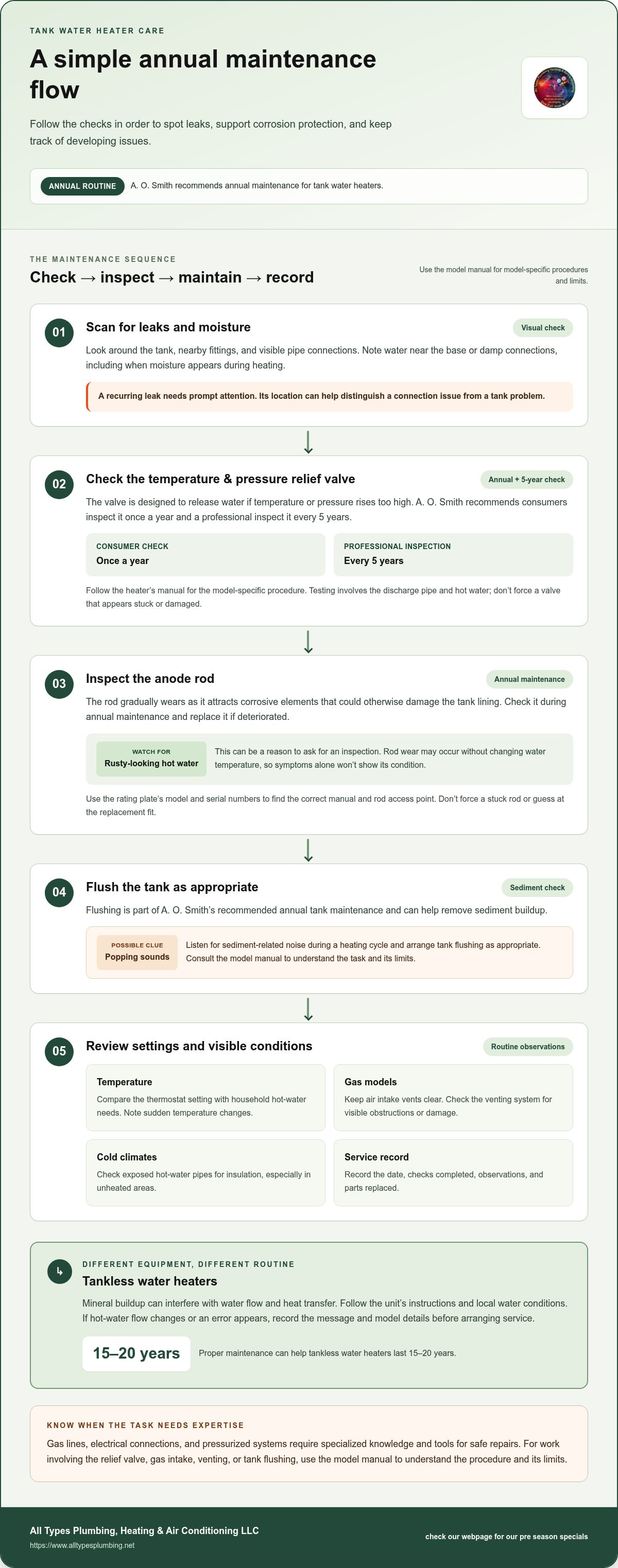
A regular maintenance routine can help catch developing problems before hot water becomes unreliable. For a tank heater, A. O. Smith recommends annual maintenance that includes testing the temperature and pressure relief valve, inspecting the anode rod, replacing it if deteriorated, and flushing the tank. Each task addresses a different concern, from pressure control to corrosion protection and sediment buildup.
Begin with a visual check. Look for leaks around the tank, nearby fittings, and visible pipe connections. Note any water near the base or damp connections, and record when it appears, especially if moisture occurs only during heating. A recurring leak needs prompt attention; its location can help distinguish a connection issue from a tank problem.
The temperature and pressure relief valve needs regular attention. A. O. Smith recommends that consumers inspect it once a year annually, and that a professional inspect it every 5 years. The valve is designed to release water if temperature or pressure rises too high. Because testing involves the discharge pipe and hot water, follow the heater’s manual for the model-specific procedure; don’t force a valve that appears stuck or damaged.
Include these checks in the routine:
Compare the thermostat setting with the household’s hot-water needs, and note sudden changes in temperature.
Inspect the anode rod for deterioration during annual maintenance, then replace it if needed.
Look for sediment-related noise, such as popping sounds during a heating cycle, and arrange tank flushing as appropriate.
On gas models, keep the air intake vents clear and inspect the venting system for visible obstructions or damage.
In cold climates, check exposed hot-water pipes for insulation, especially in unheated areas.
Tankless heaters need a different maintenance focus. Mineral buildup can interfere with water flow and heat transfer, so maintenance should follow the unit’s instructions and local water conditions. Proper maintenance can help tankless water heaters last 15-20 years. If hot water flow changes or the unit displays an error, record the message and model details before arranging service.
Keep a simple service record with the date, checks completed, observations, and parts replaced. This history can reveal recurring leaks or declining performance and give a professional useful context. For work involving the relief valve, gas intake, venting, or tank flushing, consult the model manual to understand the task and its limits. Maintenance tailored to the heater type is more useful than treating every unit alike.
A. O. Smith also recommends checking for leaks, cleaning air intake vents on gas models, inspecting the venting system, and insulating pipes in cold climates.
Choosing a qualified repair professional
Start by identifying the work your water heater needs. Gas lines, electrical connections, and pressurized systems require specialized knowledge and tools for safe repairs. Resetting a control or making a visual check is different from opening a gas control assembly or working on wiring. Matching the work to the technician’s expertise helps keep troubleshooting focused and avoids unsafe shortcuts.
For AO Smith water heater service, have the model and serial numbers ready. If the unit is under warranty, a certified service provider may perform warranty repairs at no cost. Review the warranty paperwork before arranging work and keep it available during the visit. These details help connect the heater to the right service information.
Basic checks can help you describe the problem, but they don’t replace a technical diagnosis. You can reset a tripped circuit breaker or check whether a gas supply valve is open. If the heater still won’t heat, repeatedly trips the breaker, or has an ignition problem, stop after those simple checks. Leave most repairs, especially work involving gas, electricity, or pressure, to professionals.
A thorough service visit starts with the reported symptom and the equipment’s condition. Useful details include whether hot water stopped suddenly, whether every tap is affected, and whether the unit displays an error code. An error that appears after a recent outage, for example, gives the technician a different starting point than a recurring leak. Sharing the model number and a clear description helps focus the inspection.
Good repair work identifies the cause, explains the proposed fix, and distinguishes it from other possible faults. If an electric heater delivers inconsistent temperatures, diagnosis may involve its heating elements or thermostat. If a tankless model fails to ignite, the ignition issue needs assessment rather than an assumption that mineral buildup is to blame. For AO Smith water heater service, ask what was tested and how the proposed repair addresses the problem.
Keep a record of the visit, including the date, symptoms, inspection findings, parts replaced, and any follow-up instructions. This history is useful if the problem returns or another issue develops. For warranty work, keep the service paperwork with the warranty documents. Leave repairs involving gas lines, electrical connections, or pressurized components to a qualified professional equipped to work on that system.
Use the boundary between a basic check and a repair to decide when to hand the work over. If addressing the symptom means taking the heater apart, handling a connection, or changing a component, stop rather than improvise. Your role is to share what you’ve already checked and describe what happened next, not to troubleshoot beyond basic maintenance. That gives the professional a clear starting point without turning a preliminary check into an attempted repair.
When speaking with a repair professional, explain which basic check you performed and whether it changed the symptom. Ask what work is proposed and how it relates to the problem you reported. If the explanation isn’t clear, ask for clarification before work begins. Keeping the discussion focused on the reported issue helps separate basic homeowner maintenance from work for a professional.
Common water heater problems
A sudden change in hot-water comfort is worth tracking. Note whether the water stays lukewarm, turns cold during use, or fluctuates in temperature. Record whether the issue affects every faucet or just one. These details can help distinguish a heater problem from an issue at a single fixture.
In tank water heaters, faulty heating elements or thermostat problems commonly cause inadequate heating or inconsistent temperatures. If the water never gets sufficiently warm, for example, an element or thermostat may need inspection. If the temperature varies between uses, note when the change occurs and whether it affects the whole home. A professional can use those observations to guide diagnosis instead of replacing parts based on guesswork.
Tankless units can have different problems. Mineral buildup can interfere with operation, an undersized unit may struggle to meet household demand, and ignition failures can interrupt heating. Note when the issue occurs: does hot water fail during simultaneous use, or does the unit stop heating when only one fixture is running? That comparison can help distinguish a capacity concern from a fault that needs repair.
Use a simple symptom log before arranging service:
Write down whether the water is cold, lukewarm, or inconsistent.
Record which faucets or showers are affected.
Note any displayed error message on a tankless unit.
Describe unusual sounds, visible moisture, or changes in performance.
Include the heater’s model information and whether the issue is recurring.
Pay close attention to leaks, since their location matters. Moisture near a pipe connection differs from water appearing around the tank itself. Don’t assume a puddle identifies the failed part. Note where the water first appears and whether it returns. A recurring leak, rusty-colored water, or repeated loss of heating gives a repair professional useful evidence to assess the unit.
Age and repair history also affect the next step. A water heater that is 10 to 15 years old and repeatedly has problems may need replacement. That doesn’t make every older unit an automatic replacement, but repeated failures can change the value of another repair. Consider the current fault alongside the tank’s condition, reliability, and how often hot water has been interrupted.
Keep the diagnosis focused on the observed problem. A tankless error code, a cold shower, and a leak near a fitting each point to a different starting place. Share your symptom log, explain what changed, and mention previous repairs. This gives the professional a clearer path to inspect the relevant component and explain whether repair or replacement better suits the heater’s condition.
Draining and flushing a tank
Minerals can settle at the bottom of a storage tank and form sediment. A. O. Smith says flushing removes this buildup. Popping or rumbling during heating may be noticeable, but sounds alone don’t confirm sediment is the cause. Flushing can clear deposits and lets a technician observe how the tank drains.
Plan the work around the heater’s model instructions. A. O. Smith manuals explain the unit-specific drain connection and operating controls. Most homeowners need roughly 2 hours to flush and clean a tank. That estimate includes preparation and cleanup, not just water draining. Set aside enough time to follow the manual carefully instead of rushing through the process.
Before flushing, identify the heater type and find its manual. Locate the drain valve and discharge point, then plan how to direct water safely away. The water may be hot, and the hose needs to stay in place throughout the procedure. If the valve is corroded, difficult to reach, or leaking, stop and arrange professional service rather than forcing it.
A general flush follows a deliberate sequence, though the details vary by model:
Read the manufacturer’s instructions and prepare a suitable hose and drainage route.
Follow the manual’s directions for shutting down the heater and isolating its water supply.
Connect the hose securely to the drain valve before directing water away from the unit.
Open the drain as instructed, allowing the tank water and loosened sediment to flow out.
Follow the manual’s refill and restart directions, then check the drain area for leaks.
Watch the water coming through the hose. Cloudiness or visible particles may indicate sediment leaving the tank, while clear water suggests the discharge has cleared. Appearance alone can’t establish the heater’s overall condition. A leak, a drain valve that won’t close, or water that continues escaping after the procedure needs attention.
Flushing won’t repair a damaged tank. If water leaks from the tank body, draining sediment won’t restore the metal or stop the leak. A recurring heating problem may also involve another component. Note the heater’s model, the water’s appearance, and any unusual behavior during flushing. These observations help explain what happened during service.
Draining a tank involves hot water, a drain connection, and restart steps that vary by model. If you’re uncertain about any part of the process, leave it to a professional. An incorrect restart or loose drain connection can cause further trouble. Keep the manual nearby, follow its instructions throughout, and don’t leave the heater unattended during the procedure.
All Types Plumbing, Heating & Air Conditioning LLC: Hot air furnace installation
All Types Plumbing, Heating & Air Conditioning LLC installs hot-air furnaces and tankless water heaters. A tankless upgrade may suit your household if your current setup no longer meets your hot-water needs. The right next step depends on your equipment and what you want to improve.
The company also offers mini-split heat pump installation and bathroom remodeling for separate home projects. What makes heat pumps amazing is they can cost you nothing to run if you have solar panels, and with solar-plus-storage you can keep it running day and night so your home stays comfortable without relying on the grid and keeping your electric bills down. Check our webpage for our pre season specials.
For help with a tankless water heater upgrade or hot-air furnace installation, contact All Types Plumbing, Heating & Air Conditioning LLC.
Plan the next step for your home
Your household’s hot-water needs can change after a renovation, a change in occupants, or a shift in daily routines. Consider those changes when deciding whether your equipment still suits your home. An AO Smith water heater service discussion can start with the model details, how you use the system, and what you’d like to improve. That context helps focus the next step.
If you’re planning a broader update, All Types Plumbing, Heating & Air Conditioning LLC provides hot water boiler servicing. For guidance on a home comfort project, contact the team with a brief description of your goals and equipment. You don’t need to have every technical detail figured out before reaching out.
Contact All Types Plumbing, Heating & Air Conditioning LLC to discuss your home’s needs and possible next steps. With a clear picture of what matters in your household, you can move forward with greater confidence and comfort.
Frequently Asked Questions
What is usually the most common water heater problem?
Heating problems are common, but their likely cause depends on the heater type. In a tank unit, a faulty heating element or thermostat can leave water lukewarm or cause inconsistent temperatures. In a tankless unit, mineral buildup, insufficient capacity for household demand, or ignition trouble may interrupt hot water. Note whether the problem affects one fixture or the whole home; that clue can help narrow down the cause.
Who to call when a water heater goes out?
Call a qualified plumbing and heating professional who works with your heater type. For an A. O. Smith unit under warranty, a certified service provider may be able to handle warranty repairs. Before calling, gather the model information and describe what happened, such as a blank display, an error message, or no hot water at any tap. Don’t open gas or electrical components yourself.

Comments