Hot Water Boiler Maintenance in New York

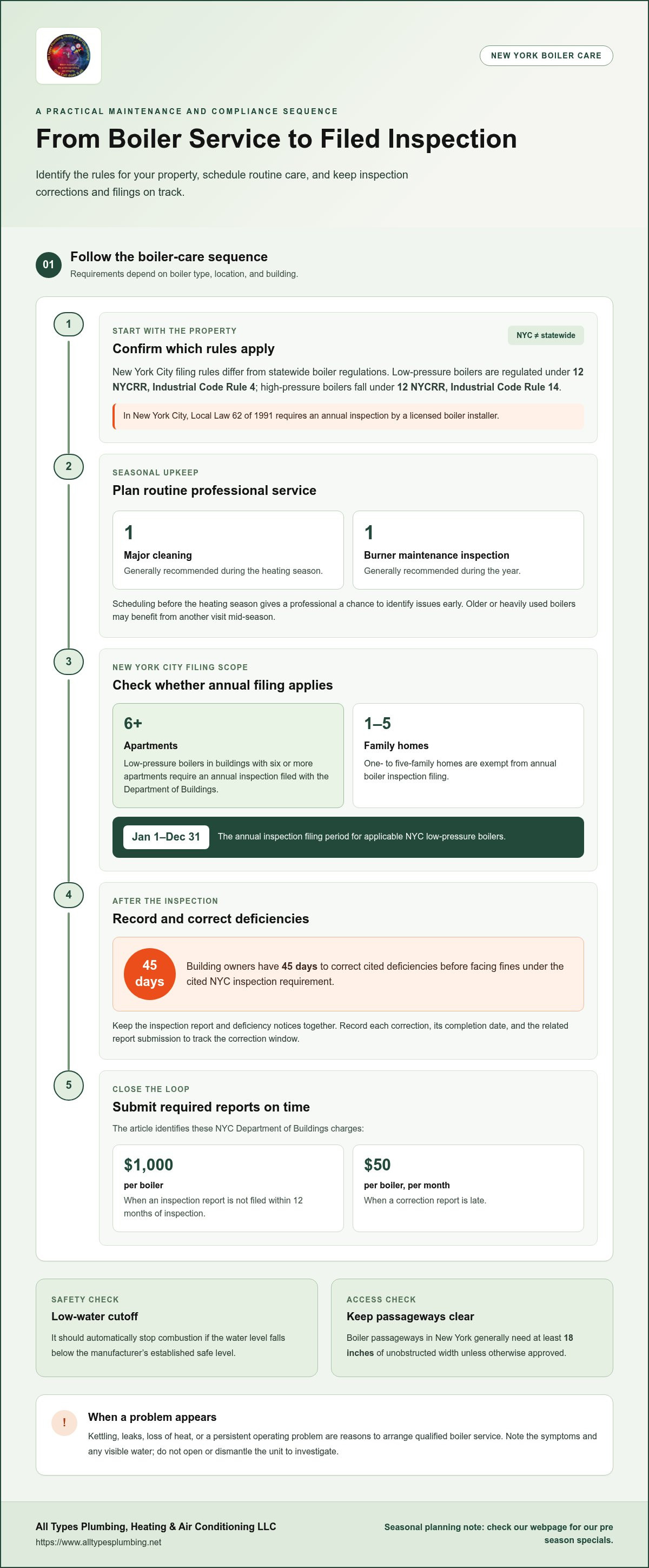
Boiler care in New York starts with two separate needs: routine maintenance and any required inspection. Experts generally recommend one major cleaning during the heating season and one burner maintenance inspection during the year. In New York City, Local Law 62 of 1991 requires an annual boiler inspection by a licensed boiler installer. That’s why hot water boiler maintenance in NY means paying attention to both the system’s condition and the rules that apply to your building.
Boiler maintenance is about more than cleaning and repairs. Clear space around the unit helps qualified professionals inspect and service it, while safety controls and low-water cutoff checks can reveal issues that need attention. Requirements vary by boiler and building, so start with the equipment you have and the rules that apply to your property.
This guide explains annual inspections and deficiency deadlines, the role of safety controls, New York boiler-room clearance requirements, and when a repair needs qualified attention. You’ll also learn how regular service fits into seasonal preparation and what to expect from a professional boiler visit. For seasonal planning, check our webpage for our pre season specials.
Table of Contents
Annual boiler inspections and deficiency deadlines
In New York, boiler care includes routine service and inspection requirements that vary by boiler type and location. New York City filing rules differ from statewide boiler regulations, so identify which requirements apply to your property.
Preventive Service and Maintenance Plans
New York City rules differ from statewide boiler regulations. New York low-pressure boilers are regulated under 12 NYCRR, Industrial Code Rule 4, while high-pressure boilers fall under 12 NYCRR, Industrial Code Rule 14. In New York City, Local Law 62 of 1991 requires an annual inspection by a licensed boiler installer.
A preventive maintenance plan sets out routine checks, while as-needed service addresses a particular concern. Compare what the visit covers, such as the inspection, burner, valves, and relief components. If your building is subject to filing rules, make sure inspection and reporting steps are coordinated. The right approach depends on the boiler’s condition, use, and applicable inspection requirements.
Service Frequency and Warning Signs
Boiler experts generally recommend one major cleaning during the heating season and one burner maintenance inspection during the year. Scheduling service before the season gives a professional a chance to identify issues before the boiler works through cold weather. Older or heavily used boilers may benefit from another visit mid-season.
Pay attention to kettling, a leak, or a boiler that stops providing heat. Kettling can result from pressure buildup caused by a heat-exchanger blockage. Leaks may originate at a pump, pressure relief valve, or condensation source, so the location matters. In New York City dwellings with required central heat, the New York City Department of Housing Preservation and Development says indoor temperatures must reach at least 68 degrees Fahrenheit from 6 a.m. to 10 p.m. when outdoor temperatures fall below 55 degrees Fahrenheit.
Risks of Neglected Maintenance
Without regular maintenance, a developing fault may go unnoticed until it interrupts heating or needs more extensive attention. Leaks, a blocked heat exchanger, or burner problems can affect reliable operation. In New York City, missing an inspection filing or correction deadline can also lead to penalties.
Building owners have 45 days to correct cited deficiencies before facing fines under the cited New York City inspection requirement. The New York City Department of Buildings charges $1,000 per boiler when an inspection report is not filed within 12 months of inspection, and $50 per boiler for each month a correction report is late. These deadlines make prompt follow-through part of responsible boiler care.
In New York City, low-pressure boilers in buildings with six or more apartments require an annual inspection filed with the Department of Buildings, between January 1 and December 31. One- to five-family homes are exempt from annual boiler inspection filing. Owners should keep track of inspection and filing deadlines to ensure reports are submitted on time.
Keep the inspection report and any deficiency notices together. After an inspection, record each correction, its completion date, and the related report submission. This simple sequence helps owners track the 45-day correction window and avoid overlooking the end-of-year filing requirement. Outside New York City, statewide rules still apply, but these city filing details do not automatically govern every property.
Contacting qualified boiler repair professionals
Call a qualified boiler professional if the system leaks, stops providing heat, or develops a persistent operating problem. A boiler that loses heat could have an issue with burner-jet ignition, an electronic igniter, a pilot light, the gas line, a pump, or a safety switch. These involve different components, so describe the symptoms instead of guessing at the cause. Note whether the boiler runs intermittently, makes unusual noises, or has visible water around its casing.
What to do when a boiler problem appears
If you see water, note whether it appears to come from inside the boiler, a pump, or a pressure relief valve. A leak inside the boiler may indicate corrosion and could mean replacement is needed. A leak elsewhere may have a different cause, so its location helps guide the repair assessment. Don’t open or dismantle the unit to investigate.
If the boiler stops heating in winter, note what the controls display and whether the burner attempts to start. Avoid repeated resets if the fault returns. In an emergency, evacuate people from the affected area and shut off gas and electricity if necessary. Only qualified or authorized personnel should access the boiler system after evacuation.
Repair or replacement: what matters
Age alone doesn’t determine whether replacement is the right choice. A professional considers reliability, corrosion, efficiency, safety, repair history, parts availability, and the condition of connected equipment. A boiler with an isolated problem and sound structure, for example, may call for a different decision than one with internal corrosion and recurring faults.
Ask for an explanation of the diagnosed problem, the required work, and how the repair addresses its cause. If replacement is recommended, the reasoning should relate the boiler’s condition to reliability and safety, not age alone. Repairing a burner or pump won’t resolve a separate corrosion problem inside the boiler. Clear findings help you weigh repair against replacement.
Before the service visit, note the boiler’s make and model if visible, its recent symptoms, and any repair history. Describe when the issue began, whether the heat is completely off, and whether the system has leaked. Mention recent changes to the electrical or fuel supply. These details give the professional a useful starting point without requiring you to diagnose the boiler.
When arranging professional help, explain whether the concern is an active leak, no heat, or an ongoing fault. That distinction helps prioritize the issue and direct attention to the relevant components. For a local next step, explore professional plumbing and heating support.
Safety controls and low-water cutoff checks
A boiler’s safety controls help manage its operation as heating demand changes. In New York, required controls depend on the boiler’s fuel input rating. Knowing the rating and control requirements helps owners discuss the system’s condition during professional maintenance. These devices differ from routine temperature settings: controls and cutoff equipment respond to operating conditions that affect safe boiler function.
Boiler operating and safety controls
New York boilers with fuel input ratings of 12,500,000 Btu/hr or less must have controls and safety devices meeting ASME CSD-1. Boilers with inputs greater than 12,500,000 Btu/hr must meet NFPA 85. The rating therefore matters when identifying the applicable standard. A qualified inspection can assess whether installed controls correspond to the boiler and its configuration.
Controls work as part of the heating system, not as isolated accessories. A professional can review operating controls, wiring, and safety devices together, then explain whether they need attention. For example, a control that fails to respond as expected may affect burner operation. Describe recurring shutdowns or unusual cycling instead of adjusting control settings yourself.
A relief valve serves a different purpose from a low-water cutoff. During a service review, a professional can assess the valve’s condition and whether its discharge path appears obstructed. Don’t cap, block, or alter the relief-valve outlet. Keep the boiler area accessible so the valve and nearby piping can be inspected.
Low-water cutoff controls
New York requires low-water cutoff controls to stop combustion automatically when water falls below the manufacturer’s established lowest safe level. The cutoff is tied to the boiler maker’s safe operating threshold. It is not a general efficiency control: its core function is to interrupt combustion when water reaches the specified low level.
During maintenance, a qualified professional can assess the cutoff’s condition and operation based on the boiler’s instructions and setup. Don’t bypass the device or try to force a test without training. If the cutoff trips, note when it happened and whether the heating system was running under demand. This information can help the professional assess the event.
What owners can note before service
Before an appointment, note the boiler’s input rating from its nameplate, if accessible, and any repeated shutdowns. Record changes in heating output or control behavior, and whether you see water near the relief valve. These observations help direct attention without turning a homeowner into the technician.
Water heaters and boilers can have different control arrangements, so identify which appliance is involved. Leave safety-control testing, wiring work, and cutoff adjustments to qualified personnel. A clear record of symptoms and the boiler’s rating helps focus the review on the right equipment and applicable standard.
Boiler installation and service clearances
Boiler-room space affects whether equipment can be reached for inspection, maintenance, and repair. In New York, passageways around all sides of boilers must have an unobstructed width of at least 18 inches unless otherwise approved. That clearance supports access around the installed unit, rather than just creating an open route to its front.
Check the whole perimeter, not one convenient side. A nearby wall, stored item, or plumbing line can narrow a passageway and interfere with access. Before placing equipment or changing the room layout, compare the available space with the boiler’s position and the applicable clearance requirements. If an approved exception applies, the clearance rule allows for it; don’t assume a tight fit qualifies without approval.
Overhead access depends on boiler design. New York boilers with manholes on top generally require at least 3 feet of clearance above the boiler. That space provides room to reach the manhole. A ceiling, duct, or other obstruction directly above the unit can compromise that access, even when the side passageways meet the 18-inch requirement.
A separate overhead clearance applies to certain high-pressure steam boilers. Under the listed clearance table, New York high-pressure steam boilers with steam-generating capacity exceeding 5,000 pounds per hour require at least 7 feet of overhead clearance. This threshold is specific to that boiler category and capacity. It shouldn’t be applied to every residential hot-water boiler.
Room access also matters in New York City multiple dwellings. The heating-system area must be readily accessible to Department members for inspection under identifier 27-2033. Keep routes to the equipment clear, and account for doors and stored materials that could block entry. Clear access helps an inspection reach the installed system, rather than stopping at the room entrance.
Liquid disposal and relief piping are also part of boiler-room planning. New York boiler rooms must have a floor drain or another approved means to dispose of liquid waste. Boiler safety and relief valve discharge piping must terminate no more than 6 inches above the floor or waste receptor. A layout review can assess whether the drain or receptor and discharge termination fit the room without obstructing passageways.
Before installation or a room alteration, map the boiler’s sides, top access, and nearby plumbing. Compare each passageway with the 18-inch requirement, then check overhead space against the boiler type and configuration. For example, a top manhole calls for a different access review than a high-pressure steam boiler above the 5,000-pound-per-hour threshold. A careful clearance review connects installation space with safe operating access and future service needs.
How often should a hot water boiler be serviced in New York?
For hot water boiler maintenance in NY, plan a professional visit each year before the heating season. Boiler experts generally recommend one major cleaning during the heating season and one burner maintenance inspection during the year. A visit before colder weather gives a professional time to assess the system before regular operation begins.
October or November is a practical scheduling window before winter. That timing can reduce the risk of breakdowns during the coldest weeks. For standard systems across our service region, annual maintenance before the heating season is recommended; older or heavily used units may benefit from a second visit mid-season. The boiler’s use and condition help determine whether annual care is enough.
Schedule recommended maintenance tasks separately. A major cleaning addresses accumulated deposits, while a burner inspection focuses on burner operation. They serve different purposes, so one should not automatically replace the other. Experts recommend one major cleaning during the heating season and one burner maintenance inspection during the year.
Before the season: Schedule the annual service in October or November.
During the year: Include a burner maintenance inspection.
During heating: Plan the major cleaning within the heating season.
Mid-season: Consider another visit for an older or heavily used boiler.
Most boilers typically need little more than annual maintenance, but the heating season can bring new symptoms to light. Keep a simple record of service dates, cleaning, and burner inspection findings. If the system starts making kettling sounds, leaking, or failing to provide heat, arrange a service assessment rather than waiting for the next calendar appointment. These signs may need attention sooner.
Fuel type can affect the schedule. For No. 2 oil-burning boilers, experts recommend supplementary cleaning two or three times during the heating season, in addition to a major cleaning. That added work is specific to this boiler type. A service professional can assess whether the system’s fuel and condition call for that additional seasonal attention.
Choose a schedule that covers routine care and any required building inspections. In New York City, a mandated inspection and preventive maintenance are related but separate tasks. Keep their dates and records organized separately, so an annual service visit doesn’t lead you to overlook an inspection filing obligation.
Set your annual appointment before winter, then note any mid-season change in performance. For help scheduling boiler service with All Types Plumbing, Heating & Air Conditioning LLC, take the next step before the heating season. Also, check our webpage for our pre season specials.
All Types Plumbing, Heating & Air Conditioning LLC: Hot water boiler servicing
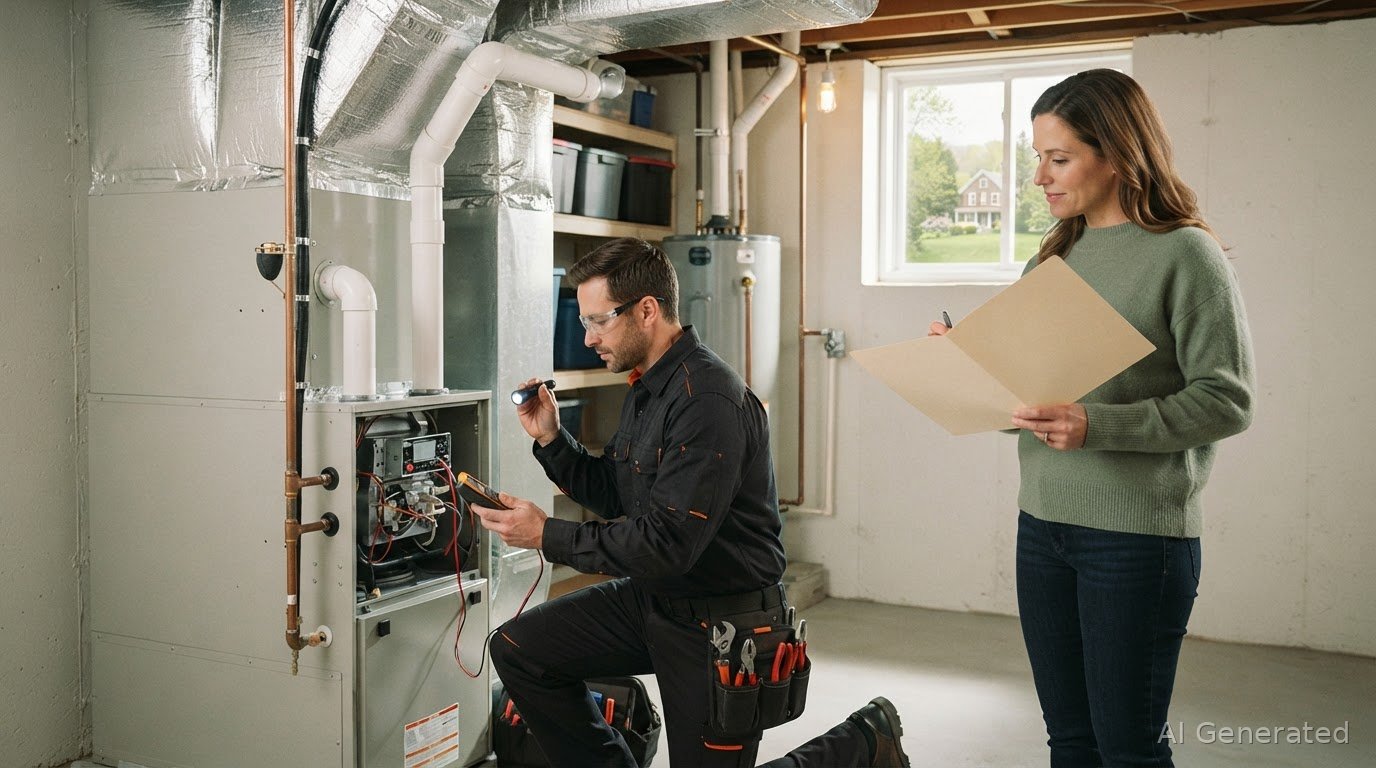
All Types Plumbing, Heating & Air Conditioning LLC provides hot water boiler servicing for homeowners arranging routine upkeep or addressing a concern. If your boiler needs attention before the heating season or its operation has changed, professional service can help assess its condition and address the issue.
Share the symptoms you’ve noticed, such as a leak, unusual noise, or loss of heat, and mention any recent service history. This context helps focus the visit on your boiler’s needs. For other home comfort projects, All Types Plumbing, Heating & Air Conditioning LLC also offers hot-air furnace installation, tankless water heater upgrades, and mini-split heat pump installation.
For boiler service or help with a heating concern, contact All Types Plumbing, Heating & Air Conditioning LLC.
Make Boiler Care Part of Your Home’s Seasonal Routine
Boiler care is easier to manage when it has a place in your household calendar. Treat it like other seasonal home tasks: set a reminder, keep service notes together, and plan how to respond to changes in performance. This routine helps you start each heating season with a clearer picture of your system’s needs.
If you’re arranging hot water boiler maintenance in NY, the next step is a professional service visit tailored to your boiler’s condition and use. All Types Plumbing, Heating & Air Conditioning LLC provides hot water boiler servicing to help you turn general guidance into practical care for your system.
Contact All Types Plumbing, Heating & Air Conditioning LLC about boiler service and take a straightforward step toward a more prepared home. With a clear plan in place, you can focus on everyday comfort and feel ready for the season ahead.
Frequently Asked Questions
What does annual hot water boiler maintenance include?
Annual maintenance typically includes an inspection, cleaning, and preventive repairs based on the boiler’s condition. Before the visit, note changes such as uneven heating, unusual sounds, or water around the unit. Share any previous service records so the technician can compare current findings with earlier work. Afterward, keep the service notes with your boiler information, making it easier to track recurring issues and plan future upkeep.
What is the average cost of boiler maintenance in New York State?
Maintenance pricing depends on the boiler’s size, condition, and the work involved. An inspection alone differs from a visit that also requires cleaning or corrective repairs. The type of boiler and the specific work needed affect the service quote. For hot water boiler servicing, the price depends on the individual job and is provided after a quote request, so describe the system and any symptoms when requesting service.
How do you safely check boiler pressure and water levels?
Use the boiler’s user manual to locate its gauge and identify the manufacturer’s recommended operating range. Read the gauge without opening the boiler cabinet or touching hot pipes, wiring, or valves. Don’t add water, change pressure settings, or bypass a cutoff unless the manufacturer’s instructions specifically guide that task. If a reading falls outside the stated range or the display is unclear, stop and arrange qualified service.
How do you find a licensed boiler service technician in New York?
For a required New York City annual boiler inspection, a licensed boiler installer must perform the inspection. For other service needs, choose a professional qualified to work on the specific boiler type and familiar with its controls. Explain whether you need maintenance, a repair, or a city inspection, and keep the resulting service documentation with your building records.

Comments