Tankless Water Heater Upgrade: 2026 Guide for Homeowners

According to the U.S. Department of Energy, conventional storage tanks lose between 15% and 30% of their energy just maintaining standby water temperatures around the clock. If you are tired of paying for wasted energy, shivering through consecutive morning showers, or worrying about an aging tank rupturing across your basement floor, a tankless water heater upgrade offers a dependable way to restore comfort and efficiency to your home.
It makes sense to want lower monthly utility bills, continuous hot water, and reclaimed floor space without taking on unexpected installation surprises. In this guide, you will discover whether an on-demand system genuinely fits your household routines, long-term efficiency goals, and current plumbing setup. We will walk through the essential realities of cold winter groundwater temperatures, gas line sizing, and venting requirements so you can move forward with complete peace of mind. As you plan your next home improvement, remember to check our webpage for our pre season specials.
Table of Contents
Tankless Water Heater vs Storage Tank: Key Differences for Homeowners
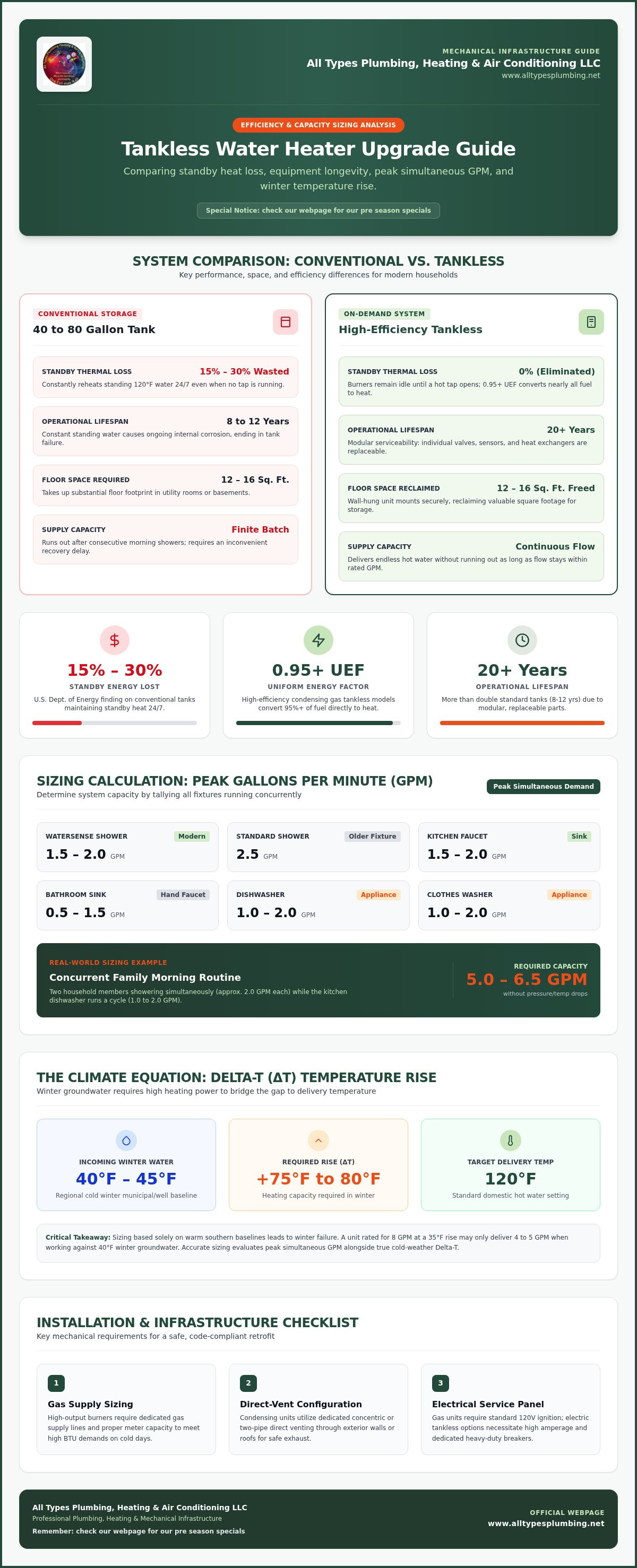
Every home relies on domestic hot water daily, yet the equipment tucked away in your basement shapes your utility bills and overall comfort far more than you might realize. Traditional storage water heaters operate like massive thermal kettles. They keep 40 to 80 gallons of standing water constantly heated to 120°F or higher, firing up day and night regardless of whether anyone is awake or using a tap. In contrast, modern instantaneous water heating systems activate high-output heat exchangers solely when a fixture calls for flow, heating incoming water on demand without storing a drop.
Choosing a tankless water heater upgrade fundamentally changes how your household experiences daily chores and routines. Storage units supply water in finite batches; once that reservoir depletes during consecutive morning routines, you face an inconvenient recovery delay. On-demand equipment produces an endless stream of hot water as long as your demand stays within the unit's rated capacity. In addition, wall-hung units free up roughly 12 to 16 square feet of floor space, reclaiming valuable square footage in crowded utility rooms, basements, or garages.
Energy Efficiency and Standby Energy Losses
Storage tanks suffer from continuous standby thermal loss, radiating heat through their jacket walls into unconditioned spaces like cold basements. Tankless units eliminate this cycle entirely because their burners or heating elements remain idle until a hot water valve opens. Today's high-efficiency condensing gas models achieve Uniform Energy Factor (UEF) ratings of 0.95 or higher, converting nearly all consumed fuel into usable domestic heat.
Equipment Lifespan and Long-Term Value
Service life represents another distinct advantage for homeowners. Conventional storage vessels hold standing water continually, meaning internal corrosion begins the day they are filled. Even with sacrificial anode rods, traditional tanks typically last only 8 to 12 years before tank failure threatens basement flooding. Tankless units offer distinct operational advantages:
Modular serviceability: Technicians can replace individual valves, sensors, and internal heat exchangers over time rather than scrapping the entire unit.
Extended operational life: With routine preventive maintenance, on-demand units regularly achieve operational lifespans of 20 years or more.
Home value protection: Modernizing mechanical infrastructure prevents sudden water damage while delivering permanent, high-efficiency mechanical infrastructure.
Investing in a tankless water heater upgrade protects your property from sudden leaks while keeping monthly operating overhead firmly under control.
Sizing a Tankless System: Calculating Flow Rate and Temperature Rise
Sizing an on-demand unit is entirely different from picking out a standard fifty-gallon tank. When evaluating a tankless water heater upgrade, success comes down to a simple mathematical relationship between simultaneous water volume and incoming water temperature. If an installer ignores either variable, your household will experience frustrating pressure drops or lukewarm showers on the coldest mornings of the year.
Many national sizing charts rely on mild southern baselines. In northern climates, equipment has to work substantially harder to heat cold well or municipal water. A detailed Forbes Home comparison of tankless vs tank water heaters highlights how these infrastructure and demand differences directly influence equipment selection. Sizing your system requires evaluating both flow and temperature rise together.
Determining Peak Gallons Per Minute (GPM)
To avoid sudden temperature drops, calculate the maximum hot water your home uses at any single moment. Add together the flow rates of fixtures likely to run concurrently:
Showers: Modern WaterSense showerheads use 1.5 to 2.0 GPM, while standard older fixtures draw 2.5 GPM.
Sinks: Kitchen faucets pull 1.5 to 2.0 GPM; bathroom hand sinks require 0.5 to 1.5 GPM.
Appliances: Dishwashers and clothes washers each demand 1.0 to 2.0 GPM while filling.
If two family members shower while the dishwasher runs, your system must deliver at least 5.0 to 6.5 GPM without hesitation.
Factoring in Regional Groundwater Temperatures
Flow rate is only half the equation. The temperature rise, known as Delta-T (ΔT), represents the difference between incoming water and your target delivery temperature, which is normally 120°F. During winter, regional groundwater temperatures often drop to 40°F or 45°F. Heating that water up to 120°F requires an aggressive 75°F to 80°F rise.
Because higher temperature rises reduce the gallons per minute a burner can produce, an undersized unit will throttle water flow to preserve heat. Matching your home's winter flow demand against regional temperature drops ensures reliable performance. If you want a clear picture of what equipment fits your home, scheduling an on-site assessment with an experienced team for a tankless water heater upgrade evaluation ensures every morning shower stays comfortably warm.
Fuel Source Comparison: Gas vs Electric Tankless Upgrades
Choosing the fuel source for your tankless water heater upgrade is one of the most critical decisions in the retrofit process. While the idea of a whole-house electric system sounds appealing and clean on paper, the physical infrastructure in your basement or utility room often tells a different story. Deciding between natural gas, liquid propane, and electricity depends on your home's existing utility feeds, your winter heating demands, and how much hot water your family uses at once.
Operating costs also balance differently depending on your local energy rates. In areas where kilowatt-hour costs run high during peak winter periods, burning natural gas or propane often provides a more cost-effective path to instantaneous hot water than drawing massive bursts of electrical grid power.
Natural Gas and Propane On-Demand Units
Gas-fired systems remain the standard choice for multi-bathroom homes in colder climates. These appliances generate immense heating output, often firing between 140,000 and 199,000 BTUs per hour to overcome frigid incoming winter water. If municipal natural gas isn't piped to your street, liquid propane (LP) serves as an outstanding alternative, using dedicated conversion kits to achieve identical high-output flow rates. Modern condensing gas units also capture latent heat from exhaust gases, maximizing efficiency and allowing safe venting through standard exterior wall penetrations.
Electric On-Demand Water Heaters
Electric units run quietly without combustion air, exhaust flues, or burner maintenance. However, attempting to heat whole-house flow rates entirely with electric resistance coils requires massive power reserves:
Extreme electrical demand: A whole-home electric tankless unit typically draws 18 kW to 36 kW, pulling 80 to 150 amps under peak operation.
Panel capacity limits: Supplying that level of current requires three or four dedicated 40A to 60A double-pole breakers, which frequently forces a costly service panel upgrade to 200 or 300 amps.
Best application: Electric on-demand systems work best as point-of-use boosters under a distant kitchen sink or for modest vacation cabins with low concurrent fixture use.
Taking time to match your fuel supply with your household's realistic demands ensures your tankless water heater upgrade delivers consistent warmth without overloading your mechanical room.
Infrastructure Requirements for a Seamless Tankless Retrofit
Replacing an old storage vessel with an on-demand unit is rarely a simple plug-and-play swap. Because these systems deliver thermal energy instantly rather than gradually, your mechanical room requires specific physical infrastructure to support that sudden power draw. Planning a tankless water heater upgrade means inspecting your fuel lines, exhaust venting paths, drainage points, and incoming water quality before hanging equipment on the wall.
Overlooking these structural details often causes burner lockouts, reduced fixture flow, or premature heat exchanger damage. Taking a proactive approach ensures your home's supporting utilities operate safely alongside your new setup.
Gas Supply Line and Meter Verification
Standard storage water heaters pull 30,000 to 40,000 BTU/hr through basic 1/2-inch gas lines. A whole-house tankless unit requires 140,000 to 199,000 BTU/hr when fully active. Under National Fuel Gas Code standards, supplying that volume requires upgrading the branch line to a 3/4-inch or 1-inch pipe depending on the distance from your main meter. If the supply line is undersized, firing the water heater can starve your heating furnace or cooking range of needed fuel pressure.
Venting and Condensate Management
Modern high-efficiency condensing units extract so much heat from combustion gases that the remaining exhaust is relatively cool. You cannot tie these appliances into existing metal B-vent chimneys. Key venting and drainage rules include:
Direct-vent materials: Flues must use dedicated Schedule 40 PVC, CPVC, or polypropylene pipe designed to handle acidic vapor.
Sidewall penetrations: Concentric vent terminations run directly through an exterior foundation wall, eliminating the expense of relining masonry chimneys.
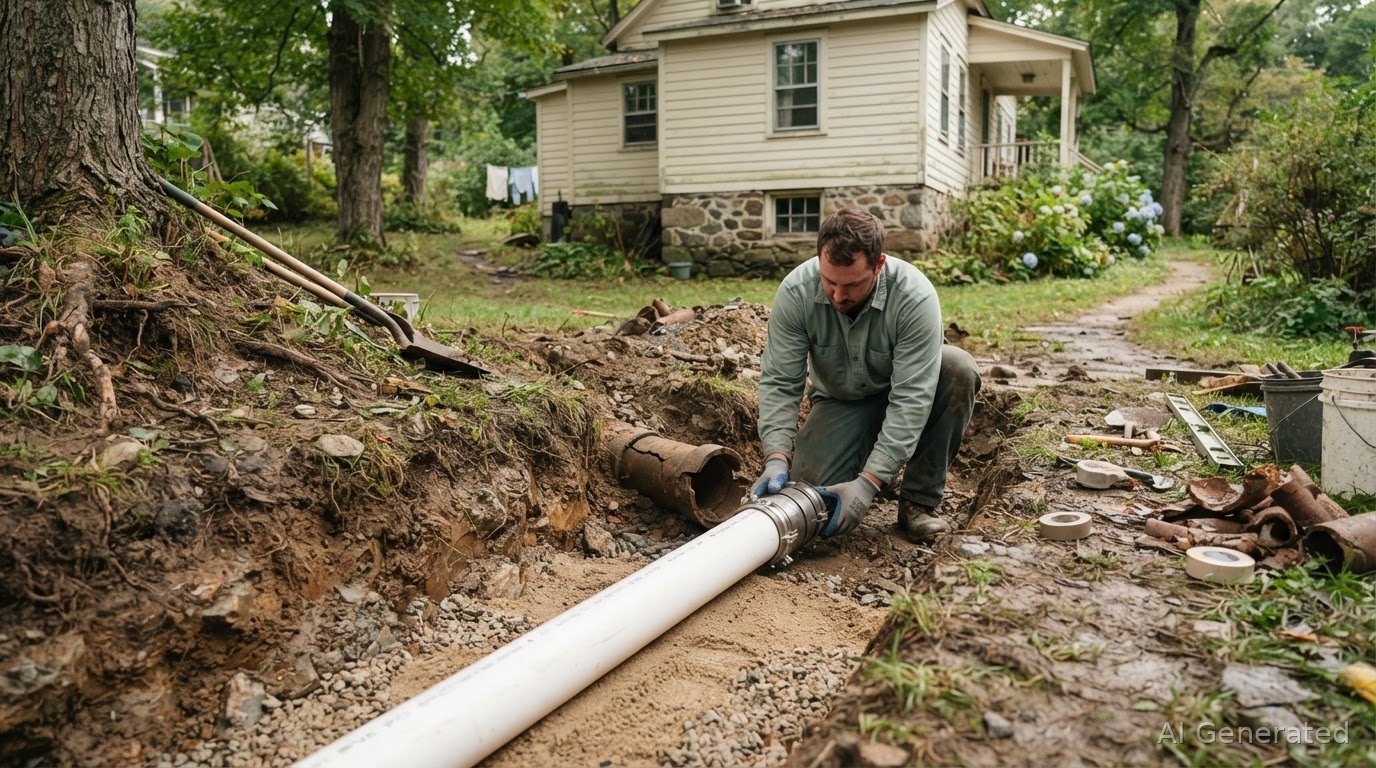
Condensate disposal: Condensing units generate mildly acidic water during operation. Running this liquid through an inline limestone neutralizer protects your home's copper or cast-iron drainpipes from chemical erosion.
Water Quality and Scale Prevention Systems
Mineral scale acts as an unwanted thermal barrier inside compact copper or stainless-steel heat exchangers. In areas with hard municipal water or private residential wells, calcium and magnesium bake onto internal passages under high heat. Installing isolation service valves allows technicians to perform annual descaling flushes using food-grade vinegar solutions, restoring full heat transfer efficiency.
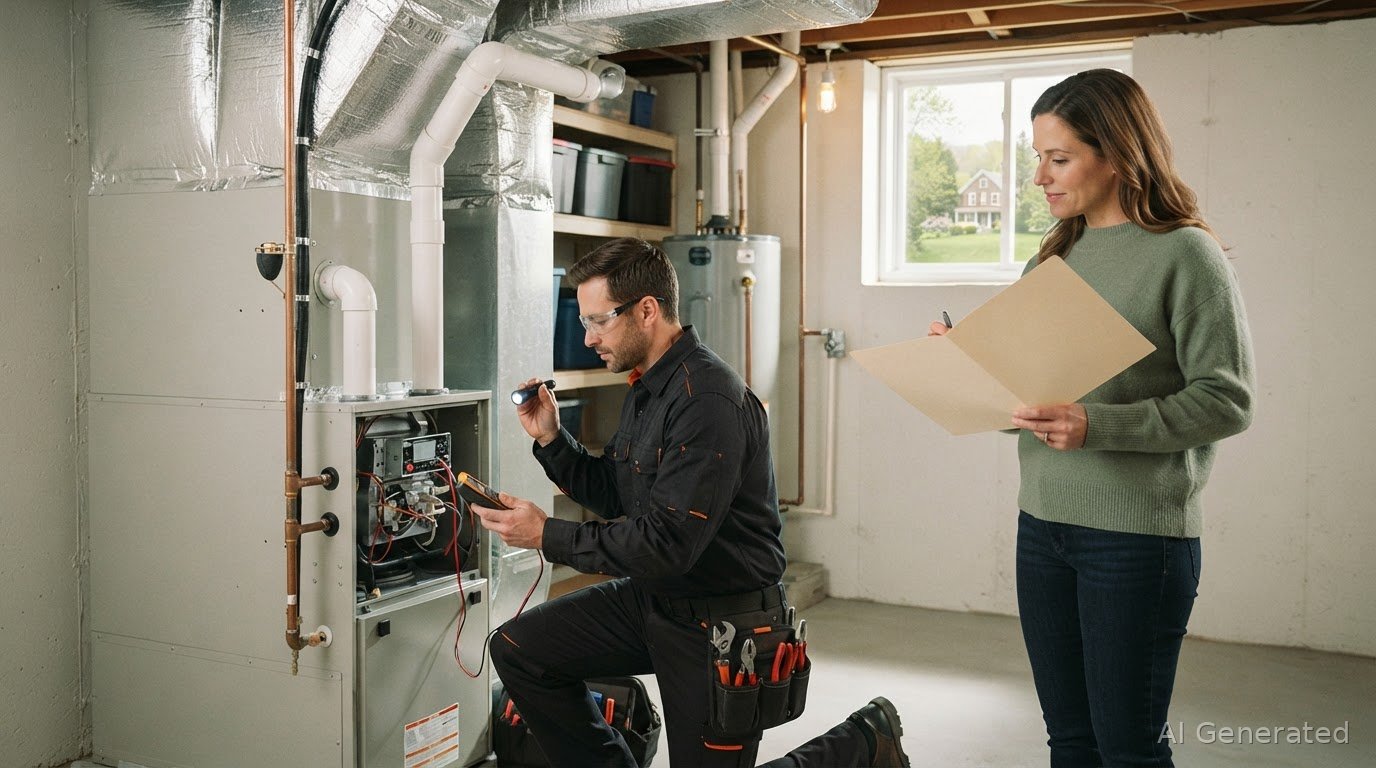
Before you commit to a purchase, let an experienced local technician verify your mechanical room's layout. You can schedule an infrastructure evaluation to ensure your gas lines, electrical supply, and venting paths are fully prepared for reliable operation.
Planning Your Tankless Upgrade in Orange County, NY
Every home across Orange County, NY has a unique mechanical layout, especially when dealing with older stone foundations, finished basements, or varying fuel supplies. Planning a tankless water heater upgrade requires a detailed on-site assessment rather than relying on automated online estimates. When you work with a trusted neighborhood team, you receive an honest evaluation of your home's infrastructure readiness, ensuring your transition happens smoothly without unexpected interruptions to your daily hot water supply.
We know things are tight. We have very affordable pricing, and taking time to inspect your setup in person guarantees you select equipment matched precisely to your family's needs. As you begin reviewing your project timing, check our webpage for our pre season specials.
Navigating Local Permitting and Code Compliance
Plumbing retrofits must strictly satisfy New York State building codes alongside local town ordinances. Pulling proper permits and scheduling required municipal inspections protects your property value and maintains manufacturer warranty coverage. Working with a fully insured local contractor ensures all safety clearances, combustion intake runs, and shutoff valves meet regional compliance standards without leaving you to navigate paperwork alone.
What to Expect During the Installation Process
A professional changeout follows a methodical, organized sequence designed to minimize household disruption:
Decommissioning the old tank: Technicians safely shut down fuel lines, drain standing sediment from the vessel, disconnect old fittings, and haul the heavy metal tank off your property.
Mechanical mounting and rough-in: The compact unit is secured to structural wall framing, followed by the installation of dedicated gas lines, isolation valves, and direct-vent exterior piping.
Testing and commissioning: The crew fires the system to verify manifold gas pressure, check exhaust drafts, test water temperature accuracy at distant fixtures, and instruct your family on basic filter care.
Selecting a Trusted Local Heating and Plumbing Partner
Working with an established tradesperson makes all the difference when upgrading domestic utilities. Check out our reviews and find us on Google or Facebook to see how we help our neighbors stay comfortable all winter long. All Types Plumbing, Heating & Air Conditioning LLC brings extensive regional retrofit experience straight to your basement door.
Give us a call for a free evaluation at 845-893-9010 to discover if a tankless water heater upgrade is the right fit for your home.
Take Control of Your Home's Hot Water Comfort
Making the switch to on-demand hot water frees your home from the risk of storage tank leaks while eliminating wasteful standby energy losses. Achieving the full benefit of a tankless water heater upgrade comes down to calculating your peak morning fixture use against cold winter groundwater temperatures and verifying that your home's fuel supply and venting are properly matched.
At All Types Plumbing, Heating & Air Conditioning LLC, our technicians bring specialized expertise to high-efficiency boiler and domestic water heating retrofits across Orange County, NY. You can find our verified customer reviews on Google and Facebook to see the honest, neighborly care we bring to every job. We are here to help you choose the right setup so your family never has to worry about unexpected cold showers again.
Ready to upgrade your home's hot water comfort? Schedule your free evaluation with our team today or call 845-893-9010 to discuss your home's setup, and check our webpage for our pre season specials. With proper sizing and expert installation, you will enjoy dependable, continuous hot water for decades to come.
Frequently Asked Questions
Can a tankless water heater provide endless hot water for large families?
Yes, a properly sized system delivers continuous hot water because it heats supply lines on demand rather than storing a finite volume. Large families can run consecutive showers without waiting for a tank to recover. The key is ensuring your unit's flow rate matches your home's peak simultaneous fixture use so multiple showers can run at the same time without losing pressure.
Do I need to upgrade my home's gas line for a tankless water heater?
In many cases, yes. Standard storage tanks burn roughly 35,000 BTUs, whereas whole-house on-demand heaters consume up to 199,000 BTUs to warm water instantly. Supplying that intense energy surge typically requires upgrading branch piping from a 1/2-inch line to a 3/4-inch or 1-inch pipe. A mechanical evaluation confirms whether your existing manifold and gas meter support that additional demand.
How long does a professional tankless water heater upgrade typically take?
A standard tankless water heater upgrade usually takes between one and two days. The overall duration depends on how much retrofitting your basement requires. While mounting the equipment and making domestic water connections goes quickly, running new dedicated direct-vent exhaust lines, upsizing fuel pipes, or running electrical circuits takes careful work. Experienced crews keep water disruption minimal throughout the process.
Will a tankless unit work reliably during cold New York winters?
Yes, a tankless unit works reliably through severe winter cold as long as it is sized for regional conditions. In Orange County, NY, incoming groundwater temperatures often dip into the low forties. Reaching 120 degrees requires a steep 75-degree temperature rise. Installing high-output equipment prevents the burner from throttling water volume during the coldest months of the year.
What routine maintenance does an on-demand water heater require?
Routine service mainly involves an annual descaling flush to clear calcium and mineral deposits from narrow heat exchanger channels. A technician pumps a food-grade vinegar solution through isolation valves to restore efficiency. Cleaning the internal cold-water inlet filter, inspecting the exterior venting terminations, and checking the condensate drain lines once a year keeps equipment running smoothly for decades.
Can I replace my electric storage tank with a gas tankless unit?
Yes, homeowners planning a tankless water heater upgrade frequently switch from electric tanks to gas or propane models to achieve greater continuous flow rates. This transition requires running a dedicated gas line to the mechanical room and venting through an exterior wall. If your home lacks natural gas street mains, a technician can easily configure the unit for liquid propane.
Does a tankless water heater instantly deliver hot water to distant faucets?
No, on-demand heating does not eliminate the physical travel time of water through your pipes. While the unit fires within seconds of detecting flow, heated water must still displace the cold standing water resting between the mechanical room and your faucet. If your bathroom sits far away, pairing the heater with a dedicated recirculation loop delivers hot water much faster.

Comments