Plumbing Pipe Leak Detection: How to Find Hidden Leaks and Protect Your Home

What if a damp patch on your wall is only the first clue to a leak you can’t see? A water stain, musty smell, soft flooring, or unexplained sound of running water can leave you wondering whether a pipe is leaking and where the water is coming from. Plumbing pipe leak detection starts with observing these clues and narrowing down the possible source, rather than guessing based on one symptom.
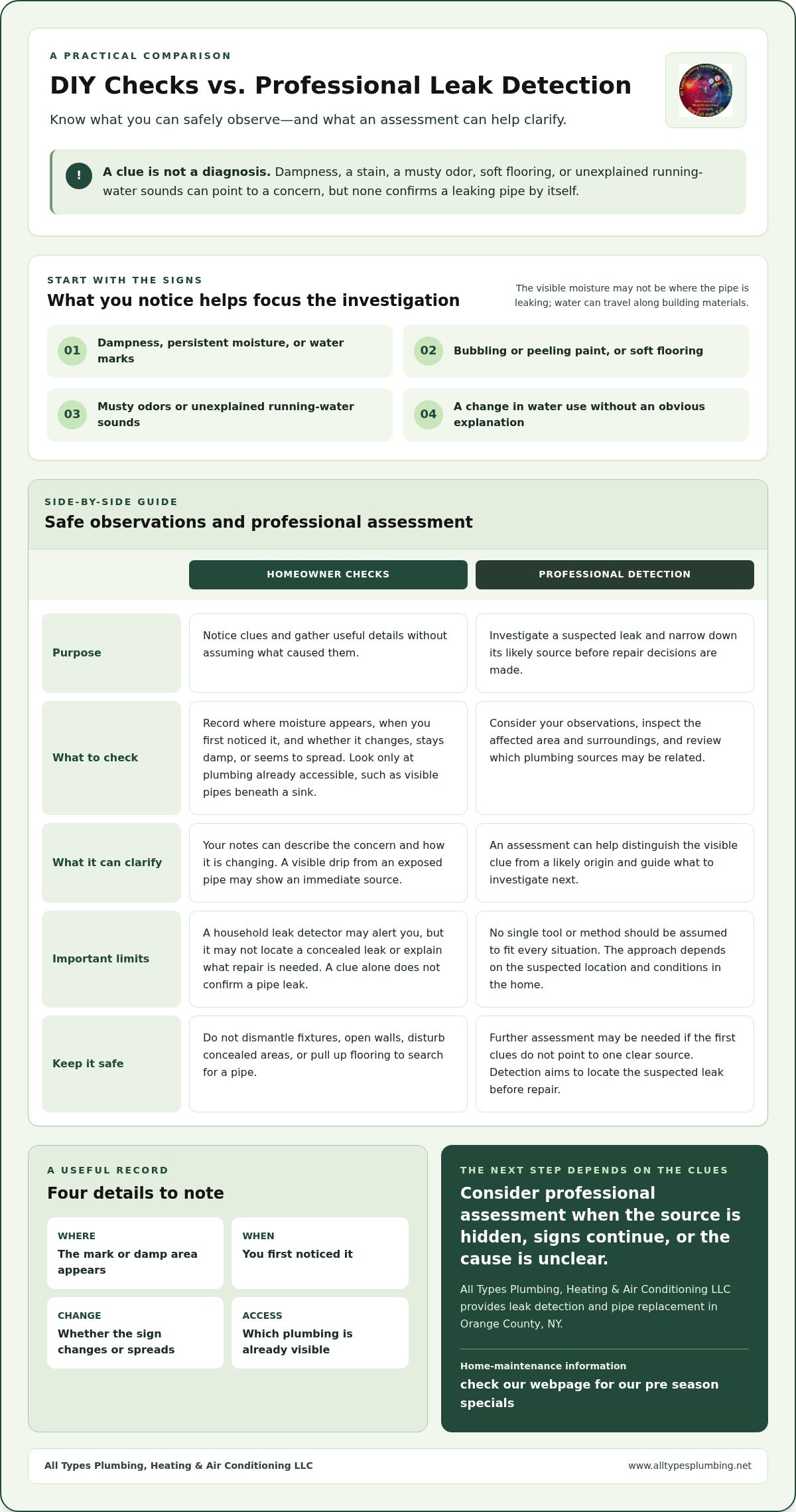
You don’t need to locate a hidden leak yourself to take it seriously. Start by noting what you see and checking only plumbing that is already accessible. These simple observations can help explain the concern, but they may not reveal the location of a concealed leak. If the source is behind a wall, under a floor, or otherwise out of sight, professional detection can help investigate the problem before repair decisions are made.
All Types Plumbing, Heating & Air Conditioning LLC provides leak detection and pipe replacement for homeowners in Orange County, NY. With useful observations and a professional assessment, you can move from an unexplained sign to a clearer next step. For home-maintenance information, check our webpage for our pre season specials.
Table of Contents
What Is Plumbing Pipe Leak Detection, and What Signs Should You Notice?
Plumbing pipe leak detection is the process of investigating a suspected leak and narrowing down its source so the appropriate repair can be considered. It begins with clues, not assumptions. A visible drip from an exposed pipe is easy to observe, but water appearing on a wall or floor may have traveled from a less obvious source. The location of the moisture can guide an inspection, though it doesn’t always show where the pipe is leaking.
Which household signs can point to a hidden pipe leak?
Look out for unexplained dampness, water marks, bubbling or peeling paint, persistent moisture, soft flooring, musty odors, or a change in water use without an obvious explanation. These signs may point to a plumbing concern, but none proves that a pipe is leaking. Moisture may have another cause, and the place it becomes visible may be some distance from the source.
Keep a simple record of what you notice. Write down where the mark or damp area appears, when you first saw it, and whether it changes. Note whether the area stays damp or whether the signs seem to spread. This information can help a plumber understand the concern and focus the assessment without requiring you to open walls or floors.
How is a hidden pipe leak different from a visible plumbing drip?
A dripping connection beneath a sink can usually be seen directly, making it easier to identify the immediate source. With a concealed leak, water may emerge through a ceiling, wall, or floor while the pipe remains hidden behind that surface. Moisture can also travel along building materials, so the visible spot may not line up with the leak.
That’s why plumbing pipe leak detection involves narrowing down a suspected source rather than treating one symptom as a diagnosis. An unexplained increase in water use or a damp patch is useful information, but it needs to be considered alongside where the signs appear and what is happening nearby. The leak detection methods overview provides background on different ways leaks can be investigated. The appropriate approach depends on the suspected location and conditions at the property.
Stay observant, but don’t disturb a concealed area just to search for a pipe. Clear notes and a professional assessment can help turn an uncertain clue into a more informed next step. For home-maintenance updates, check our webpage for our pre season specials.
How Does Professional Plumbing Pipe Leak Detection Narrow Down the Source?
A professional assessment narrows down possibilities instead of guessing at a repair based on a water mark alone. The plumber can consider what you’ve observed, inspect the affected area, and look at which plumbing sources may be related. This helps distinguish the visible clue from a likely origin and gives the next step a clearer basis.
What happens during an initial leak inspection?
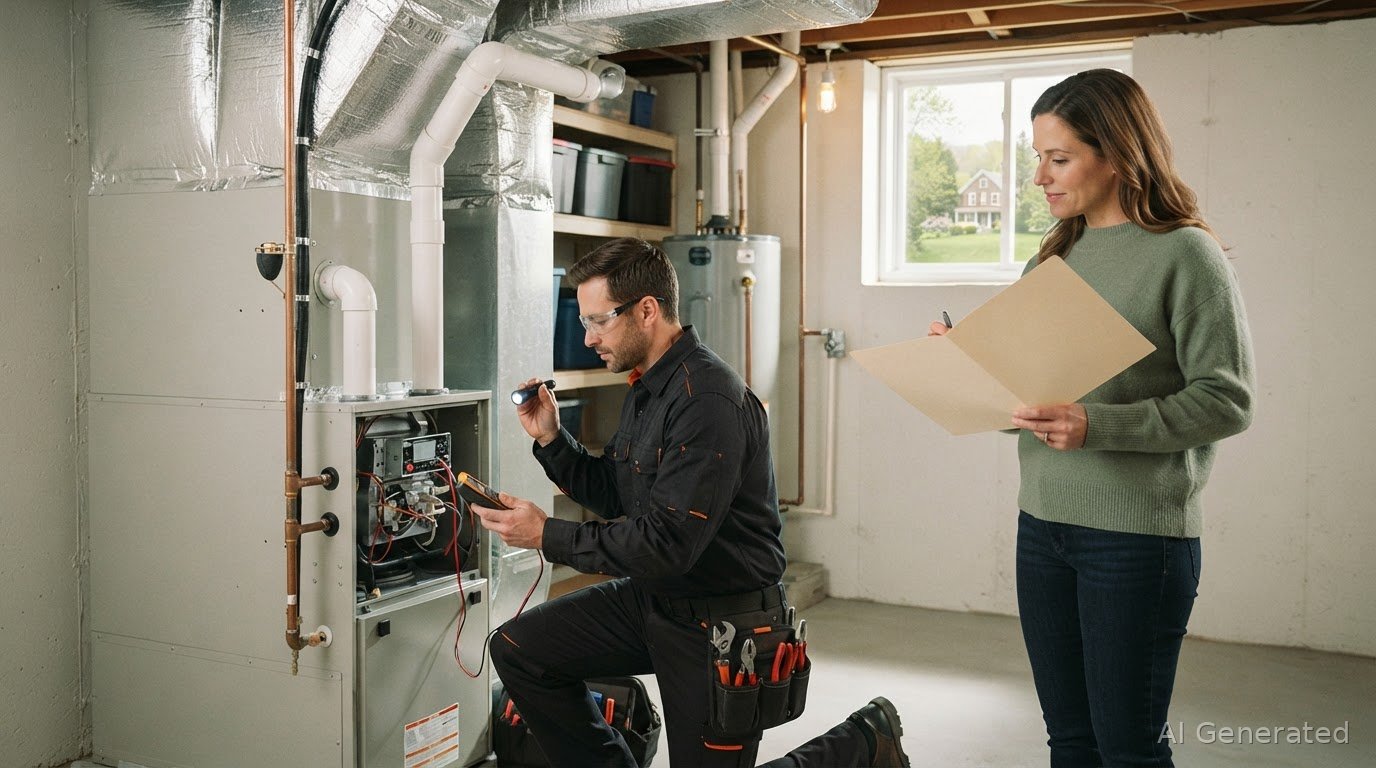
Your notes can help focus the discussion: where moisture appeared, when you noticed it, and whether anything has changed since. The plumber can visually assess the affected area and its surroundings, looking for details that may help identify likely sources. The inspection informs what to do next. It doesn’t mean a particular repair is assumed before the cause is understood.
Conditions at the property matter. A suspected leak near an exposed pipe is different from one that may be behind a wall or beneath a floor. The location of the signs, the plumbing that can be accessed, and what is visible all help guide the investigation. If the first clues don’t point to one clear source, further assessment may be needed.
What detection tools might help locate a concealed leak?
The useful approach depends on where the leak is suspected and the conditions in the home. A plumber can use observations from the inspection to decide whether additional detection is appropriate. There isn’t one tool or method that should be assumed to suit every situation, and the source or outcome cannot be determined from a water mark alone.
Detection aims to locate the suspected leak before repair so the work can address the source rather than only the visible symptom. A measured assessment can help avoid treating an unrelated area or choosing a repair without enough information. The U.S. Environmental Protection Agency shares homeowner guidance on why it’s useful to find and fix leaks. A professional assessment can help investigate a concealed plumbing concern in the context of the property.
All Types Plumbing, Heating & Air Conditioning LLC provides leak detection and pipe replacement in Orange County, NY. For help with a suspected hidden pipe leak, call the local plumbing team at 845-893-9010. You can also check our webpage for our pre season specials.
DIY Checks vs. Professional Leak Detection: What Can Homeowners Safely Do?
A household leak detector may provide an alert, but it won’t always identify the source of a concealed pipe leak or explain what repair is needed. Start with simple observations and checks you can do safely. Professional plumbing pipe leak detection is a sensible next step when the likely source is hidden, the signs continue, or you can’t tell what is causing them.
What can you check before calling a plumber?
Track where you see moisture and whether it changes. Look at plumbing you can already access, such as visible pipes beneath a sink, but don’t dismantle fixtures, open walls, or pull up flooring. The EPA’s guide to detecting leaks yourself includes basic checks such as monitoring a water meter and using food coloring in a toilet tank. These checks may help identify a possible leak, but they won’t necessarily locate a concealed pipe problem.
If water appears to be actively spreading, take reasonable steps to limit further exposure only if you can do so safely. For example, avoid using the affected fixture and move nearby belongings away from the damp area if it’s safe. Don’t handle wet electrical equipment or attempt a repair you’re unsure how to perform.
When is professional leak detection the sensible next step?
Arrange a professional assessment if the source remains hidden, moisture persists, or basic checks suggest a problem you can’t locate. A symptom by itself doesn’t confirm a pipe leak, and buying a detector doesn’t guarantee that you’ll find the cause. An assessment helps connect the available clues to a likely source, so repair decisions can be based on more than guesswork.
Take notes, stick to checks that feel safe, and leave concealed plumbing undisturbed. For plumbing maintenance, check our webpage for our pre season specials.
What Should You Do If You Suspect a Pipe Leak?
A new damp spot or stain can be unsettling, especially when you can’t see what’s causing it. Take a measured approach: record what you notice, avoid disturbing concealed plumbing, and arrange an assessment if the source remains unclear or the signs persist. These steps help you share useful information without treating a clue as a confirmed diagnosis.
What information should you note before an inspection?
Make a brief record of the visible signs. Note where moisture or staining appeared, when you first noticed it, and whether the area has changed. If you’ve taken a step such as stopping use of a nearby fixture, mention that too. Your observations can help guide the discussion, but they don’t need to identify the cause.
How can you limit disruption while the source is investigated?
Keep the affected area accessible where practical, and avoid opening walls or floors to search for a concealed pipe. If water seems to be actively spreading, take reasonable steps to limit further exposure only if it’s safe to do so. Don’t attempt plumbing repairs beyond your ability. The appropriate next action depends on what the assessment finds.
Use this simple sequence to move from concern to assessment:
Observe: Identify where the sign appears without assuming what caused it.
Document: Note when it began, where it is, whether it has changed, and any steps you’ve taken.
Protect the area: Keep the space accessible and avoid disturbing concealed surfaces or plumbing.
Arrange professional help: If the source is hidden or the signs persist, share your notes and request an assessment.
Follow the findings: Let the inspection guide what happens next rather than choosing a repair based on guesswork.
Clear details can make the initial conversation more useful. All Types Plumbing, Heating & Air Conditioning LLC provides leak detection and pipe replacement in Orange County, NY. Call to arrange professional leak detection at 845-893-9010. For other home-maintenance information, check our webpage for our pre season specials.
Professional Plumbing Pipe Leak Detection in Orange County, NY
A damp area with no obvious cause can leave you unsure what to do next. If you’ve noted where the signs appear but can’t locate the source, professional plumbing pipe leak detection can help investigate the suspected problem before repair planning begins.
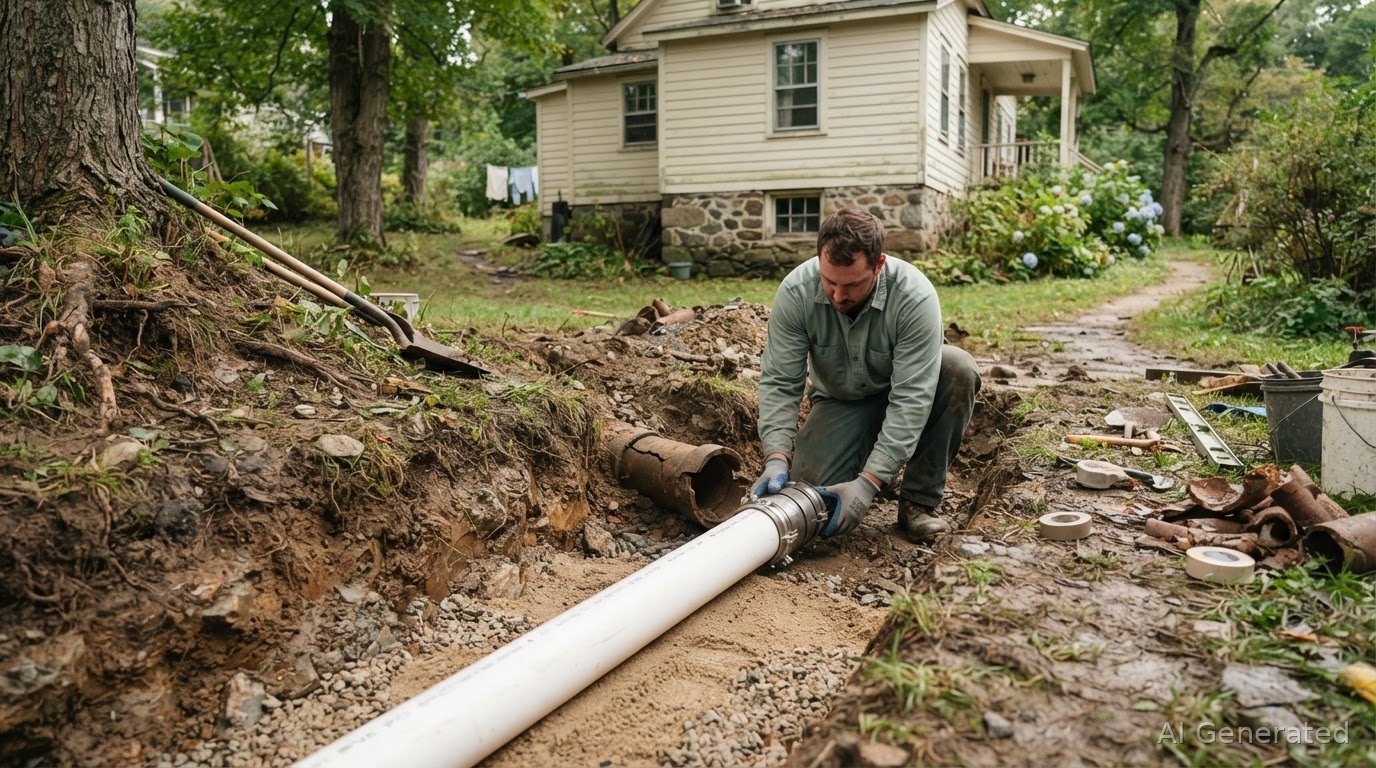
All Types Plumbing, Heating & Air Conditioning LLC is a local, family-owned and operated business serving homeowners in Orange County, NY. The company provides leak detection and pipe replacement. A suspected leak doesn’t automatically mean a pipe needs replacement. The assessment helps clarify what may be happening, and the appropriate next step depends on the findings.
How can local plumbing help clarify a suspected leak?
Share what you’ve observed, including where moisture or staining appeared and when you noticed it. A plumber can consider those details alongside the affected area to help narrow down a likely source. That gives repair planning a clearer starting point than relying on a visible mark alone.
Leak detection investigates a suspected source. Pipe replacement is a separate service that may be appropriate depending on the condition of the plumbing. The assessment helps inform whether repair is needed and what it should address, rather than assuming the same solution for every concern.
What is a simple next step for Orange County, NY homeowners?
If you suspect a pipe leak and can’t identify the source, contact All Types Plumbing, Heating & Air Conditioning LLC to discuss leak detection. Share the signs you’ve noticed and arrange a professional assessment. There’s no need to open a wall or floor to prepare. Clear observations are a helpful place to start.
Call 845-893-9010 to discuss a suspected pipe leak in Orange County, NY. Visit our webpage for more information, and check our webpage for our pre season specials.
Take the Next Step Toward a Clear Answer
A damp patch or unexplained stain is a useful clue, but it doesn’t confirm where a leak is coming from. Note what you see, avoid disturbing concealed areas, and arrange an assessment if the source remains unclear or the signs persist. Plumbing pipe leak detection helps narrow down a suspected source before repair decisions are made.
For homeowners in Orange County, NY, All Types Plumbing, Heating & Air Conditioning LLC is a local, family-owned and operated business providing leak detection and pipe replacement. The appropriate next step depends on the assessment, and replacement isn’t automatically needed for every suspected leak.
If you’re concerned about a hidden pipe leak, contact All Types Plumbing, Heating & Air Conditioning LLC or call 845-893-9010 to discuss your concern. Check our webpage for our pre season specials. Clear observations and professional help can make it easier to decide what to do next.
Frequently Asked Questions
What are the most common signs of a plumbing pipe leak?
Common clues include unexplained damp areas, water marks, bubbling or peeling paint, soft flooring, musty odors, or a change in water use without an obvious reason. You might also notice water where no fixture is nearby. These signs can help you decide whether to investigate further, but none confirms a pipe leak on its own. Note where and when the clue appears, then arrange an assessment if it persists or concerns you.
How do plumbers detect a leak in a hidden pipe?
Plumbers consider your observations and inspect the affected area to help narrow down likely sources. The approach depends on where a leak is suspected, what plumbing is accessible, and the conditions at the property. A visible water mark may guide the inspection, but it doesn’t necessarily show where the pipe is leaking. Professional plumbing pipe leak detection aims to locate the suspected source before repair decisions are made.
Can a water leak be hidden behind a wall or under a floor?
Yes, a suspected pipe leak may be concealed behind a wall, beneath a floor, or behind another surface. Moisture can become visible some distance from its source, so the location of a stain or damp patch may not identify the exact leak point. A mark on a wall is a clue to investigate, not a diagnosis. Record where it appears and share that information during a professional assessment.
Should I try to find a pipe leak myself before calling a plumber?
You can make simple observations and look at plumbing that’s already visible, such as pipes beneath a sink, without dismantling anything. Note where moisture appears and whether it changes. A household detector or basic check may suggest a leak, but it may not locate a concealed pipe problem. Don’t open walls or floors, take apart fixtures, or attempt repairs beyond your ability. Arrange professional help if the source remains unclear.
What should I do first if I suspect a pipe leak?
Note where you see moisture or staining and when you noticed it. Keep the affected area accessible where practical, and avoid opening walls or floors to search for a hidden pipe. If water seems to be spreading, take reasonable steps to limit further exposure only if it’s safe. Share your observations and any steps you’ve taken with a plumber. If the source remains unclear or signs persist, arrange a professional assessment.
Can a plumber find a leak without opening the wall?
An inspection may help narrow down a suspected source without opening a wall, but the approach depends on the location and conditions at the property. A plumber can consider your observations and assess the affected area. If the pipe is concealed, further investigation may be needed, so don’t assume a particular method or damage-free result. Avoid opening the wall yourself and let the assessment guide the next step.
Does All Types Plumbing provide leak detection in Orange County, NY?
Yes. The local, family-owned and operated business can help homeowners investigate a suspected pipe leak that is difficult to locate. To discuss a concern, call 845-893-9010. For home-maintenance information, check our webpage for our pre season specials.

Comments