Boiler Efficiency Upgrades: A Greenwood Lake Homeowner’s Guide to Lower Bills

Imagine waking up on a Tuesday morning during a Greenwood Lake cold snap only to find your living room is cozy while the back bedrooms feel like an icebox. It's a frustrating reality for many of us in Orange County, and it often comes with the added stress of unpredictable monthly bills. You're likely tired of paying more for less comfort, or perhaps you're feeling that familiar spike of anxiety every time the wind howls, wondering if this is the year your old system finally quits. If you've been searching for a way to restore order to your home's climate, you're in the right place.
We understand that true efficiency is a system wide achievement, not just a number on a sticker. This guide will show you how strategic boiler efficiency upgrades can transform your home into a sanctuary of warmth while significantly lowering your annual fuel consumption. While federal tax credits for boilers expired at the end of 2025, there are still excellent local opportunities like the EmPower+ program and utility rebates to help you save. We'll walk through the specific steps to optimize your heating system, from proactive maintenance to modernizing your setup for long term peace of mind.
Table of Contents
What is Boiler Efficiency and Why Does it Matter in Greenwood Lake?
Living in Greenwood Lake means our heating systems face unique challenges. We aren't just dealing with cold; we're dealing with rapid shifts in temperature and humidity that can make an older boiler struggle to keep up. When we talk about boiler efficiency upgrades, we're looking at how well your system converts fuel into actual warmth for your family. Understanding this relationship is the first step toward reclaiming your home comfort and stabilizing your winter budget.
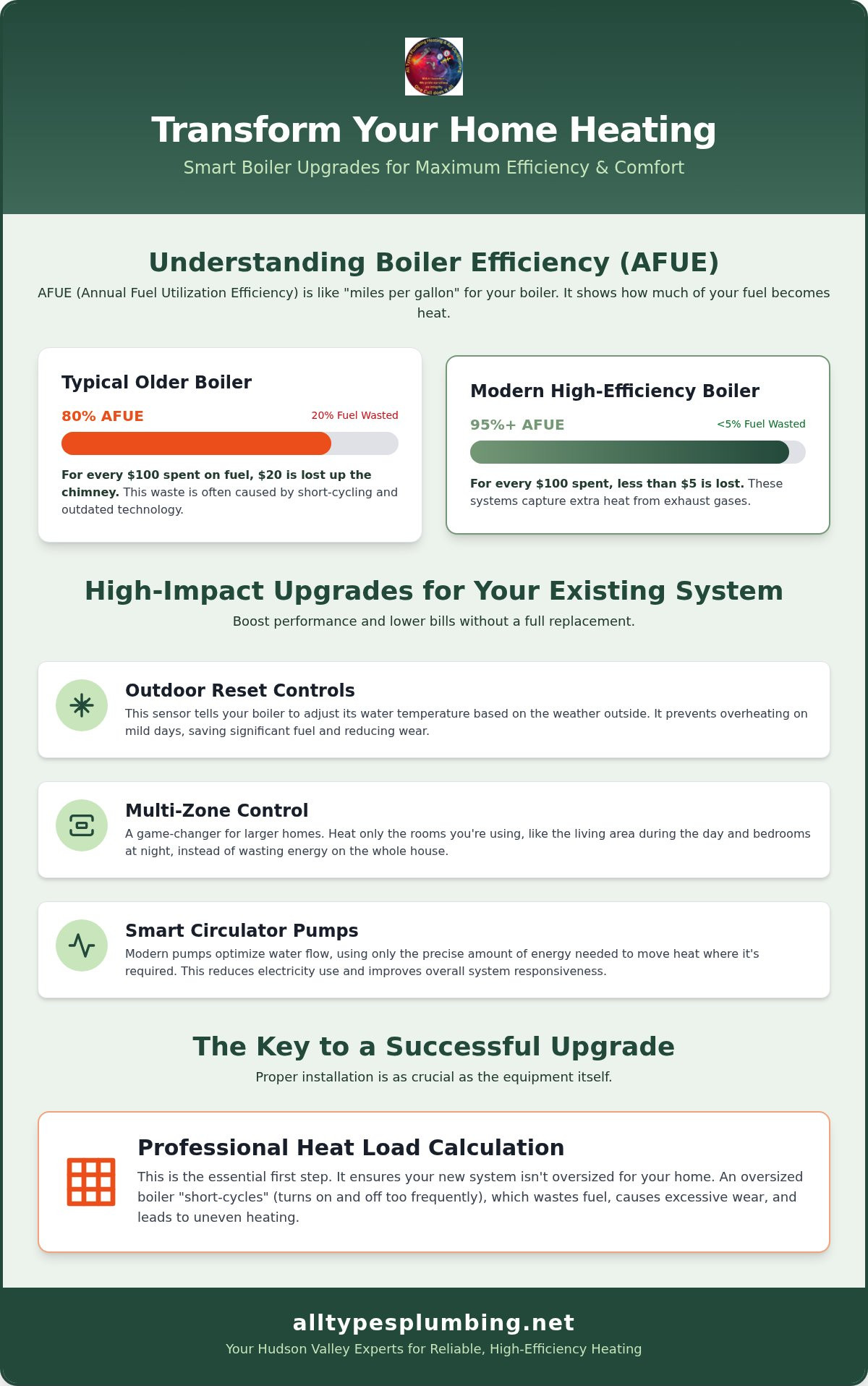
Annual Fuel Utilization Efficiency (AFUE) is the ratio of annual heat output to total fuel energy consumed. Think of AFUE as the "miles per gallon" for your home. If your boiler has an 80% AFUE rating, it means 80% of the fuel you pay for becomes heat, while the other 20% escapes through the flue. This waste shows up directly on your monthly bill as money that never actually warmed your house. In 2026, the industry is shifting. While new federal rules requiring 95% efficiency for residential units were recently withdrawn, commercial standards are becoming much stricter this October. This shift signals where the market is going, making high-efficiency units the standard for anyone looking to future-proof their home and gain control over their heating costs.
The True Cost of an Inefficient Boiler
An old, struggling boiler doesn't just cost you more in fuel; it costs you in comfort and equipment life. One of the biggest "silent killers" of efficiency is short-cycling. This happens when a boiler turns on and off too frequently, which is as hard on your system as stop-and-go traffic is on a car engine. This constant stress wears down critical components and often leads to uneven heat, leaving your kitchen sweltering while the upstairs bedrooms stay chilly. Investing in boiler efficiency upgrades helps eliminate these cycles, ensuring your system runs smoothly and reliably when you need it most.
Local Climate Factors in Orange County, NY
Our local environment near the lake adds another layer of complexity. High humidity levels can affect how fuel burns and how gases vent from your home. During a "Polar Vortex" event, an inefficient system might run constantly without ever reaching your thermostat's set point. Many homeowners are now looking at how condensing boilers work to solve these issues. These systems capture heat from exhaust gases that traditional boilers simply throw away, which is why they often achieve AFUE ratings of 95% or higher. Proactive improvements ensure your home remains a resilient sanctuary, no matter how unpredictable the Hudson Valley weather becomes.
High-Impact Boiler Efficiency Upgrades for Your Existing System
You don't always need to tear out your entire heating system to see a drop in your monthly bills. Many homeowners in our community are surprised to learn that targeted boiler efficiency upgrades to their existing equipment can yield impressive results. By focusing on how your system communicates and moves heat, you can achieve a more consistent indoor temperature without the price tag of a full replacement. It's about working smarter with the equipment you already have in your basement.
One of the most effective additions is an outdoor reset control. This sensor monitors the air temperature outside and tells your boiler to adjust its water temperature accordingly. On a mild October afternoon, your system doesn't need to work nearly as hard as it does during a January freeze. Following ASHRAE standards for residential heating helps ensure these controls are calibrated for peak performance. This prevents "overshooting" your target temperature, which saves fuel and keeps your home from feeling like a sauna every time the heat kicks on.
Advanced Controls and Sensors
For larger Greenwood Lake homes with multiple floors or additions, multi-zone control is a game changer. It allows you to heat only the rooms you're using, rather than warming the entire house just to keep the master bedroom comfortable. Integrating these controls with modern smart home ecosystems lets you monitor your system from your phone. This gives you a layer of protection, allowing you to spot potential issues before they turn into emergency repairs. If you're curious about which sensors would benefit your specific layout, a professional boiler assessment can point you in the right direction.
Mechanical Component Enhancements
Upgrading to a variable-speed ECM circulator pump is another mechanical win. Traditional pumps are either "on" or "off," but smart pumps adjust their speed based on the actual demand in your pipes. This reduces electricity use and prevents that annoying "banging" sound in your radiators. Additionally, automatic vent dampers act like a lid on a pot of boiling water. They close when the burner shuts off, trapping residual heat inside the boiler instead of letting it escape up the chimney. Even simple boiler efficiency upgrades like insulating exposed pipes in unheated crawlspaces can stop heat loss before the warmth ever reaches your living space. These proactive steps ensure every bit of fuel you pay for goes exactly where it belongs.
Maintenance vs. Upgrade: Making the Right Financial Choice
Deciding whether to keep patching up your old boiler or invest in a new one is a major financial crossroads. It's about balancing today's costs against tomorrow's savings. For many Greenwood Lake families, the goal is simply to get through the winter without a midnight system failure. If your unit is less than fifteen years old and has been well-maintained, a professional tune-up can often restore lost performance. This process involves cleaning the heat exchanger, checking gaskets, and calibrating the burner to ensure you're getting the best possible output from your current setup.
However, there is a point where throwing money at repairs no longer makes sense. We call this the point of diminishing returns. If you're spending a significant amount every year on service calls, that's money that could be better spent on boiler efficiency upgrades or a full system replacement. While older cast-iron units often hover around 80% AFUE, modern condensing boilers achieve 95% or higher, meaning nearly all your fuel is converted to usable heat. That 15% difference in fuel consumption adds up quickly over a single Orange County winter.
Signs Your Boiler is Ready for an Upgrade
Your boiler will usually give you warning signs before it quits entirely. It's better to catch these early than to wait for a total breakdown during a New York cold snap. Pay attention to these common red flags:
Increasing frequency of service calls or small, persistent leaks around the unit's base.
Unusual noises like banging, whistling, or "kettling," which suggest internal scaling and restricted water flow.
Yellow burner flames or visible soot buildup around the unit; these indicate incomplete combustion and potential safety risks.
The Benefits of Proactive Replacement
Waiting for a total failure usually leads to rushed decisions and higher emergency costs. By planning a proactive replacement, you can take your time to choose the best system for your home's layout. You also gain access to significant financial incentives available in 2026. Even though federal tax credits expired at the end of 2025, New York homeowners can still tap into the NYS Clean Heat program or utility rebates for Energy Star certified models. For income-eligible households, the EmPower+ program offers substantial support for these vital boiler efficiency upgrades. Beyond the financial ROI, a new system provides the relief of knowing your home is safe and efficient for the long haul.
Planning Your High-Efficiency Boiler Installation
Planning a high-efficiency installation requires more than just picking a model from a catalog. It's about ensuring the unit fits your home's unique footprint and existing infrastructure. The first and most critical step is a professional heat load calculation. This isn't a guess based on square footage; it's a technical assessment of how much heat your home actually loses through its walls, windows, and roof. By understanding these specific needs, you avoid the common mistake of buying a system that's poorly matched to your living space.
Right-Sizing Your System
In the past, the common belief was that a bigger boiler was always better. We now know that an oversized unit is actually a liability. It heats the water too quickly, causing the system to turn on and off constantly, which we've already identified as a major cause of wear and tear. If you've recently upgraded your insulation or windows, your home likely needs a smaller, more efficient unit than the one currently in your basement. Matching the boiler to your specific radiation, whether you have cast-iron radiators or modern baseboards, ensures that every room reaches the right temperature at the right time.
Venting and Infrastructure Changes
Transitioning to a high-efficiency condensing boiler often means saying goodbye to your traditional chimney. These units extract so much heat from the exhaust that the remaining gases are cool enough to vent through PVC pipes. This change requires careful planning, especially regarding where those pipes exit your home to meet safety requirements. These systems also produce a small amount of acidic water, or condensate, which must be drained properly. In finished basements, this might require a small pump to move the water to a nearby drain. Navigating Greenwood Lake local building codes and safety inspections is a standard part of our process, ensuring your upgrade is both legal and safe.
Choosing the right fuel source, whether sticking with gas or exploring hybrid options like pairing a boiler with mini-split heat pumps, depends on your long-term goals. To avoid the rush of the winter season, we recommend scheduling these boiler efficiency upgrades during the 'shoulder' seasons of spring or autumn. This timing ensures you aren't left without heat during a cold snap and gives our team the time needed for a meticulous setup. If you're ready to start planning, contact our team for a professional installation estimate today.
Reliable Heating Solutions with All Types Plumbing
We aren't just a service company; we're a fixture of the Greenwood Lake community. Our family-owned business understands that your home is your sanctuary, especially during a harsh New York winter. We prioritize your peace of mind by offering grounded, reliable solutions that focus on safety and comfort. When you call us, you're speaking with experts who care about the outcome for your family and your budget. Our reputation is built on being a steady hand for our neighbors, providing the relief that comes with a job done right the first time.
One of the most effective boiler efficiency upgrades you can invest in is a consistent preventive maintenance plan. While new equipment is a great long-term goal, keeping your current system in peak condition is often the smartest financial move you can make today. Our proactive approach identifies potential failures before they become midnight emergencies during a cold snap. We look at the small details, from combustion quality to circulator pump performance, to ensure your system operates at its highest possible standard. If your equipment is still viable, we'll help you get every ounce of performance out of it.
Our expertise extends across the full spectrum of modern heating technology. From hydronic heating system service to high-efficiency tankless water heater upgrades, we stay current with industry best practices to provide you with the best advice. We believe in providing clear, dependable paths forward for every homeowner. Whether that involves targeted boiler efficiency upgrades to your controls or a sophisticated system overhaul, we focus on what makes sense for your specific home layout and financial goals.
A Local Family-Owned Partner
Local roots matter when the temperature hits single digits. We know the layout of homes in Orange County and the specific challenges our climate brings to traditional heating systems. Our team is committed to keeping your home safe and warm, treating every property with the same respect we'd show our own. We keep our workspaces clean and our communication honest, ensuring you're never left in the dark about your system's health. You can count on us for a neighborly approach that prioritizes your family's stability over a high-pressure sales pitch.
Ready to Lower Your Heating Bills?
If you're tired of unpredictable bills or uneven heat in different rooms, it's time for a professional perspective. We offer comprehensive assessments to identify exactly where your system is losing energy and where your money is being wasted. From there, we'll build a customized plan that fits your comfort needs and your budget. Contact All Types Plumbing, Heating & Air Conditioning LLC today for your boiler consultation!
Secure Your Home's Warmth for the Winters Ahead
Preparing your home for the next Hudson Valley cold snap doesn't have to be a source of stress. We've explored how a combination of smart controls, proactive maintenance, and right-sized installations can turn your heating system into a model of reliability. Whether you're fine-tuning your current setup or planning for comprehensive boiler efficiency upgrades, the goal is always the same: consistent comfort and manageable bills. Taking a proactive step now ensures you won't be left in the cold when the lake freezes over.
As local Greenwood Lake experts and an Energy Star authorized installer, we're here to help you navigate these choices with honesty and technical expertise. Our team has been family-owned and operated since day one, and we treat your home's stability as our top priority. You deserve the peace of mind that comes from a system that works exactly as intended, even during the harshest New York weather. Schedule Your Professional Boiler Efficiency Audit Today to start optimizing your home.
We look forward to helping you achieve the comfort and savings you deserve this winter. You can rest easy knowing your home is in good hands with a neighbor who cares about the outcome.
Frequently Asked Questions
How much can I actually save with a boiler efficiency upgrade?
Savings depend on your current system's age and fuel type. Moving from an 80% AFUE unit to a 95% condensing model can reduce fuel consumption by approximately 15%. For a Greenwood Lake home, this translates to hundreds of dollars saved over a single heating season. These results are most noticeable when you combine equipment changes with other boiler efficiency upgrades like smart controls and improved pipe insulation.
Is it worth upgrading my 20-year-old boiler or should I just replace it?
At twenty years, most boilers have reached the end of their reliable lifespan. While minor repairs might keep it running, the risk of a major failure during an Orange County cold snap is high. Replacing the unit allows you to take advantage of modern condensing technology and significantly higher efficiency ratings. Investing in a new system provides long term peace of mind that a simple component upgrade cannot match.
What is the difference between a standard and a condensing boiler?
Standard boilers lose a significant amount of heat through their exhaust gases. A condensing boiler uses a larger heat exchanger to capture that wasted energy, turning it into usable warmth for your radiators. This process is why condensing models achieve AFUE ratings of 95% or higher. It's a more advanced way to heat your home that reduces waste, lowers your monthly fuel bills, and reduces your overall carbon footprint.
Do I need to change my radiators if I upgrade to a high-efficiency boiler?
You typically don't need to replace your radiators when you install a high efficiency boiler. Modern systems are designed to work with existing cast iron radiators or baseboard heaters. However, a professional should verify that your current distribution system is clean and balanced. Ensuring your radiators are free of air pockets and sediment helps your new boiler move heat through the house as efficiently as possible for maximum comfort.
Can an outdoor reset control really lower my fuel consumption?
Yes, an outdoor reset control is one of the most effective boiler efficiency upgrades available. It monitors the temperature outside and automatically lowers the boiler's water temperature on milder days. This prevents the system from running at full blast when only a little warmth is needed. By matching the heat output to the actual weather, you reduce fuel waste and enjoy more consistent indoor temperatures throughout your home.
How often should I have my boiler serviced to maintain peak efficiency?
You should have your boiler serviced at least once a year. We recommend scheduling this maintenance in the late summer or early autumn before the heating season begins. A professional tune up involves cleaning the burner, checking the heat exchanger, and testing safety controls. Regular care prevents small issues from turning into expensive emergency repairs and ensures your system maintains its peak efficiency rating throughout the winter.
Are there any NY state rebates for high-efficiency boiler installations in 2026?
New York offers several incentives in 2026, though federal tax credits for boilers expired on December 31, 2025. The EmPower+ program provides significant support for low to moderate income households looking to improve their home's efficiency. Additionally, utility providers like National Grid often offer rebates for ENERGY STAR certified models. If you're switching to a heat pump, the NYS Clean Heat program provides even larger financial incentives for local homeowners.
What happens if my boiler isn't working correctly after an upgrade?
If your system isn't performing correctly after an upgrade, it's often a matter of fine tuning the controls. High efficiency systems are more complex and sometimes require adjustments to the flow rate or thermostat settings to match your home's specific layout. Our team stands by our work and will return to troubleshoot any issues. We prioritize your comfort and won't rest until your system is running safely, quietly, and reliably.


Comments